
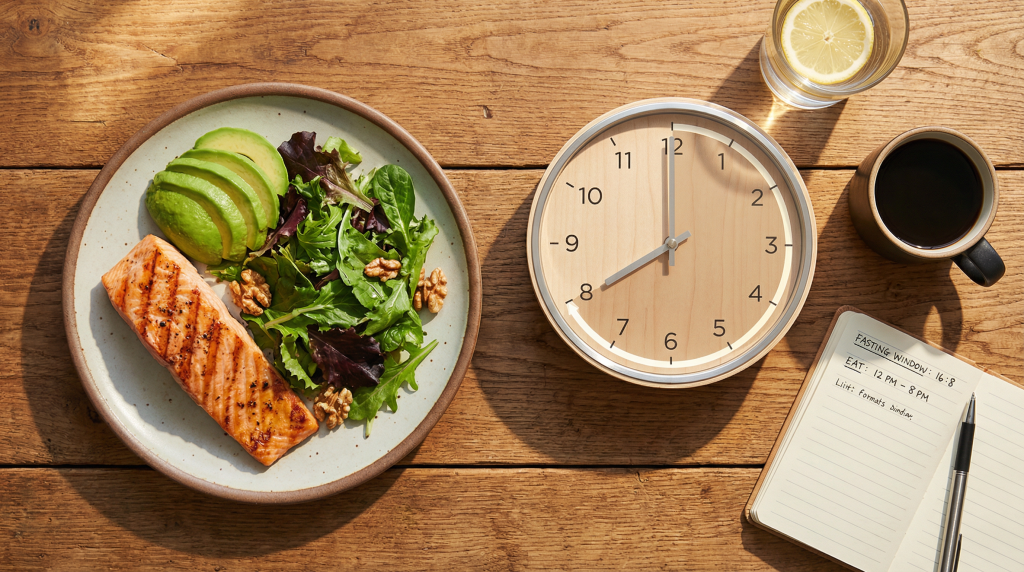
Why Keto and Intermittent Fasting Work Better Together
The ketogenic diet and intermittent fasting (IF) are two of the most powerful strategies for weight loss and metabolic health — and when combined, they create a synergistic effect that amplifies the benefits of each approach.
On keto, your body is already primed to burn fat for fuel. Intermittent fasting extends the period during which your body relies exclusively on stored fat, deepening ketosis and accelerating fat loss. Together, they create a metabolic environment that is optimized for burning fat, reducing inflammation, and improving insulin sensitivity.
What Is Intermittent Fasting?
Intermittent fasting is not a diet — it is an eating pattern that cycles between periods of eating and fasting. Unlike traditional diets that focus on what you eat, IF focuses on when you eat.
Popular Intermittent Fasting Schedules
- 16:8 Method: Fast for 16 hours, eat within an 8-hour window (most popular and beginner-friendly)
- 18:6 Method: Fast for 18 hours, eat within a 6-hour window
- 20:4 Method (Warrior Diet): Fast for 20 hours, eat within a 4-hour window
- OMAD (One Meal a Day): Eat one large meal per day within a 1-hour window
- 5:2 Method: Eat normally 5 days per week, restrict calories to 500-600 on 2 non-consecutive days
- Alternate Day Fasting: Alternate between normal eating days and fasting days
The Science Behind Combining Keto and IF
1. Deeper Ketosis
Fasting depletes glycogen stores faster and increases ketone production. When you are already on keto, fasting pushes you into deeper ketosis, where fat burning is maximized.
2. Enhanced Autophagy
Autophagy is your body’s cellular cleanup process, where damaged cells are broken down and recycled. Both keto and fasting independently promote autophagy, and combining them amplifies this effect. Autophagy is associated with longevity, reduced cancer risk, and improved cellular health.
3. Improved Insulin Sensitivity
Both keto and IF lower insulin levels. Chronically elevated insulin is a driver of obesity, type 2 diabetes, and metabolic syndrome. The combination of keto and IF creates the most favorable insulin environment for fat loss.
4. Increased Growth Hormone
Fasting increases human growth hormone (HGH) production by up to 300-500%. HGH promotes fat burning, muscle preservation, and cellular repair.
5. Natural Appetite Suppression
Ketones are natural appetite suppressants, making it much easier to fast for extended periods without feeling hungry. This is why keto and IF are such a natural pairing — keto makes fasting effortless.
How to Start Keto and Intermittent Fasting
Step 1: Get Comfortable with Keto First
Spend at least 2-4 weeks on the keto diet before adding intermittent fasting. This allows your body to become fat-adapted, which makes fasting much easier and more comfortable.
Step 2: Start with 16:8
Begin with the 16:8 method — skip breakfast and eat your first meal at noon, with your last meal by 8 PM. This is the easiest fasting schedule to maintain long-term.
Step 3: Gradually Extend Your Fasting Window
As you become comfortable with 16:8, you can experiment with longer fasting windows (18:6 or 20:4) if desired. Listen to your body and do not force extended fasts.
Step 4: Prioritize Nutrient Density
With a shorter eating window, every meal needs to count. Focus on nutrient-dense whole foods: quality proteins, healthy fats, and low-carb vegetables.
What to Eat During Your Eating Window
Your meals should follow standard keto macros (70-75% fat, 20-25% protein, 5-10% carbs). Here is a sample day on keto + 16:8 IF:
- 12:00 PM — First Meal: 3-egg omelet with cheese, avocado, and bacon. Side of sauteed spinach in butter.
- 3:00 PM — Snack (optional): Handful of macadamia nuts or a fat bomb.
- 7:00 PM — Last Meal: Grilled salmon with asparagus and hollandaise sauce. Side salad with olive oil dressing.
What Can You Consume During Your Fasting Window?
- Water — still or sparkling, with or without a squeeze of lemon
- Black coffee — no cream, sugar, or sweeteners
- Plain tea — green, black, or herbal (unsweetened)
- Electrolytes — sodium, potassium, magnesium (zero-calorie)
- Apple cider vinegar — diluted in water (1-2 tablespoons)
Common Mistakes to Avoid
- Starting both keto and IF simultaneously — get fat-adapted on keto first
- Not eating enough during your eating window — undereating leads to muscle loss and metabolic slowdown
- Ignoring electrolytes — fasting increases electrolyte loss, especially sodium
- Overcomplicating it — start simple with 16:8 and adjust from there
- Breaking your fast with junk food — prioritize whole, nutrient-dense keto foods
Who Should Avoid Keto + IF?
- Pregnant or breastfeeding women
- People with a history of eating disorders
- Those with type 1 diabetes (consult your doctor)
- People taking medications that require food
- Anyone underweight or with nutritional deficiencies
The Bottom Line
Combining the keto diet with intermittent fasting is one of the most effective strategies for accelerated fat loss, improved metabolic health, and enhanced mental clarity. Start with keto, get fat-adapted, then gradually introduce intermittent fasting. The combination is powerful, sustainable, and backed by a growing body of scientific research.
Explore More Keto Resources
- The Ultimate Guide to the Keto Diet — Everything you need to know in one place
- How to Start Keto — Step-by-step beginner’s guide
- Keto Food List — Complete list of what to eat and avoid
- Keto Meal Planning Guide — 7-day meal plan with shopping list
- Keto Flu Guide — Symptoms, causes, and remedies
- Keto FAQ — 50+ questions answered
- Keto Resource Hub — All guides and resources in one place